
Autumn 2015.
Sponsor : JNTO
After an early breakfast, we took off from the hotel and drove up north for about 4 hours to a small castle town called Gujo-Hachiman. We will be participating in a Japanese food replica workshop. Every time I dine at Japanese restaurants, I always wonder how they actually made those food replicas which look so realistic. Today I’m going to find out and experience making them.

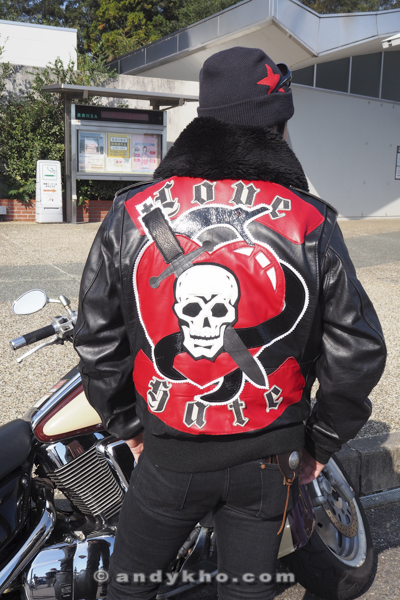
A cool custom bike

Harley Davidson Softtail Cruiser

And this is the rider

Met this bike during the rest stop on the highway


A view of the city from the highway
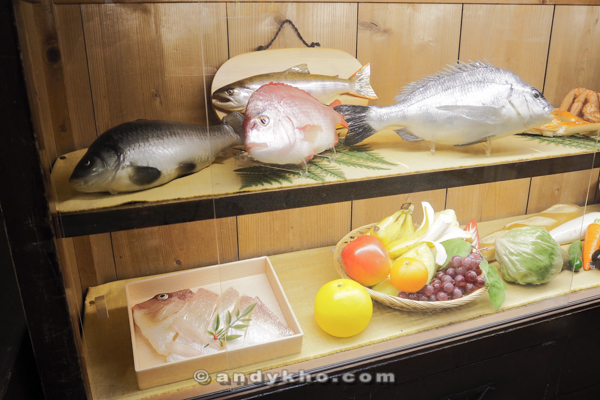
We arrived at a 150 years old Japanese “machiya” style building and one interesting feature at the shopfront was a signboard that’s literally a huge log chopped into half, the smooth flat side bearing the name Sample Kobo in kanji, which was written in Japanese calligraphy. Sample Kobo opened its first shop here in 1991 and have been the main supplier of replica food in Japan.

With the company’s president Kaneyama-san at the front of the shop.
The surroundings looked really clean and neat. Gujo-Hachiman is a small town with vast greenery and amazing fresh autumn breeze. My uncovered bald head tells me the temperature was about 16 degree Celcius. Gujo-Hachiman is a town well-known for it’s crystal clear water and for it’s traditional Gujo-Odori dance festival, which started more than 400 years ago.

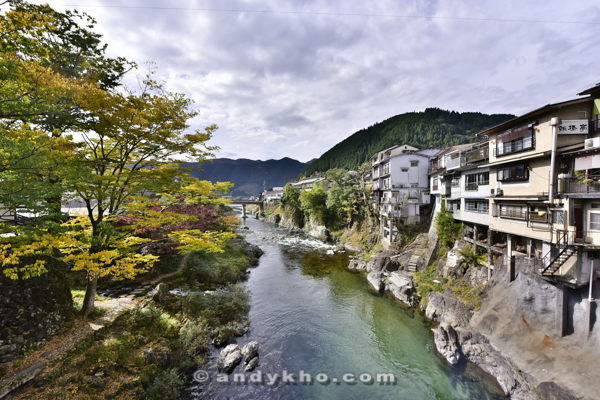
Fresh water flowing down from the mountain range
I stepped into the shop, escorted by Kurosawa-san who is always in his neat suit, while his assistant Yoza-san explained briefly about the shop. The company president Kaneyama-san welcomed us with big smiles as he looked at me going nuts at the sample food, especially the huge replica crabs.

Kaneyama-san showing us some of their products.

The one on my head cost JPY 86,400 (US$ 850) while the one on my hand cost JPY 54,000 (US$ 530)


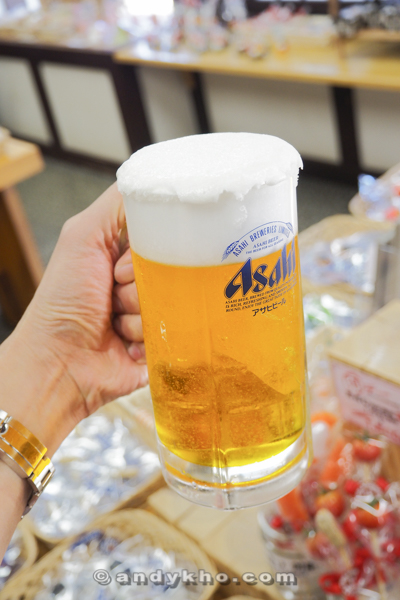
I would love to have this but it’s too expensive to buy.

Oh and I want the big one too!!!

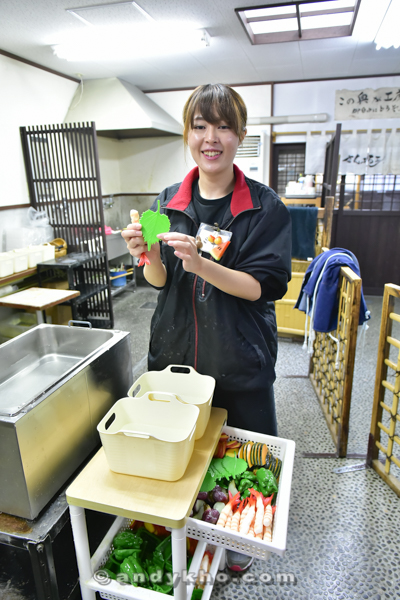
After the introduction, he gave me an apron to put on as the instructor was waiting for us. I was provided base items such as wax prawn, pumpkin and broccoli. Those base items are pre-fabricated in their factory at the back of the shop. The interesting part is how they make the tempura skin. “It is very simple really, it is all just wax. I am going to teach you how to make replica tempura,” explained the kawaii sensei. All you need is melted wax with the exact coloring and room temperature water.

“You basically pour the wax into a sink filled with room temperature water, and while the wax is still soft, you place the prawn onto the floating wax, wrap it around the prawn gently and bath it with the water. And it’s done! Now you try it!” said the sensei.

With my kawaii food replica sensei

Pouring the colored wax into room temperature water
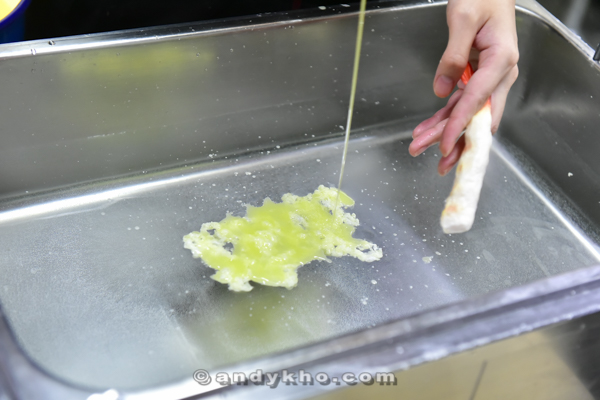
As the wax hit the room temperature water it starts to solidify but not completely harden

You places the shrimp onto the wax tempura skin
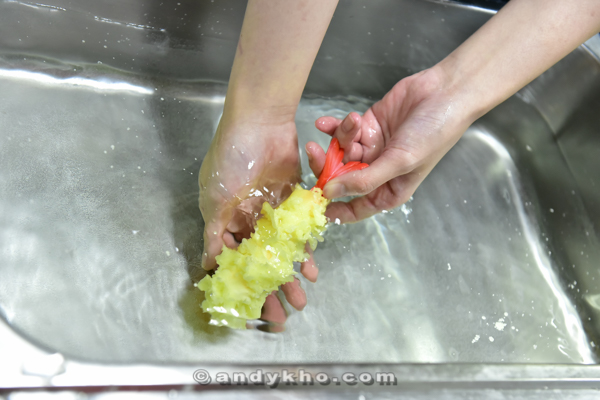
Then you use your hand to shape the tempura skin around the shrimp

And it is done!

So here goes! Making my first replica tempura!

Making my replica shrimp tempura


Next, she showed me how to make lettuce.

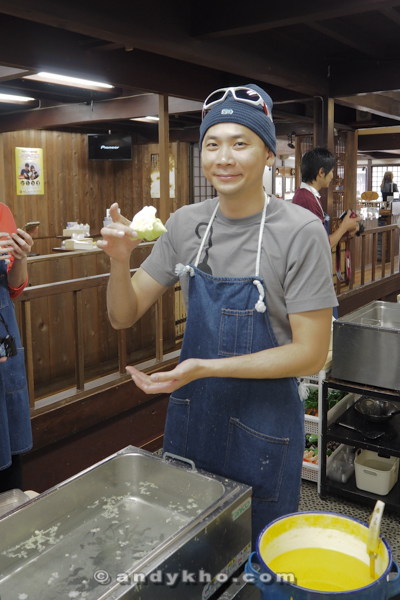

Myself (andykho.com) with Eleng Wong (The China Press), sensei and Yee Long (Guang Ming Daily)
After the workshop, Kaneyama-san gave us a tour around part of the factory.

Even the texture of the meat feels realistic.


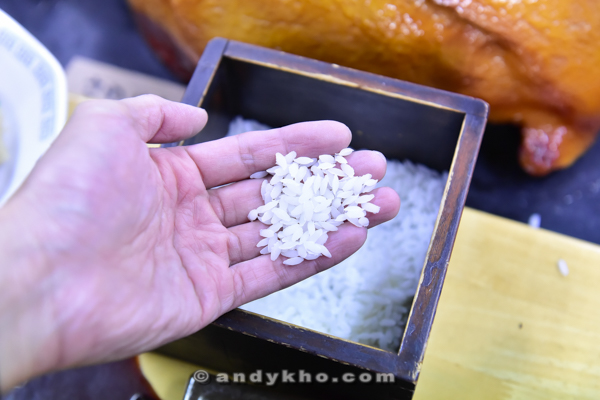
The even have replica rice grain.


Freshly colored replica Japanese sausages

This macha ice cream looks so real!
Pix of some of the products in the shop :

Met some Japanese tourist




Here’s a video on how to make shrimp tempura.
So if you are interested to take part in the replica food making classes, here are some of their entry level/fun classes. Reservation is highly recommended for all workshops. There are no age restrictions but preschool children need to be accompanied by adults.
Sweet and tarts. 20 minutes. JPY 900 for 1 piece.
Tempura making. 3 tempura piece and 1 lettuce leaf. 30-50 minutes. JPY 1200
Ice cream in cup. 20 minutes. JPY 900 for 1 piece.
Website : www.samplekobo.com

Click the map above for Google map location
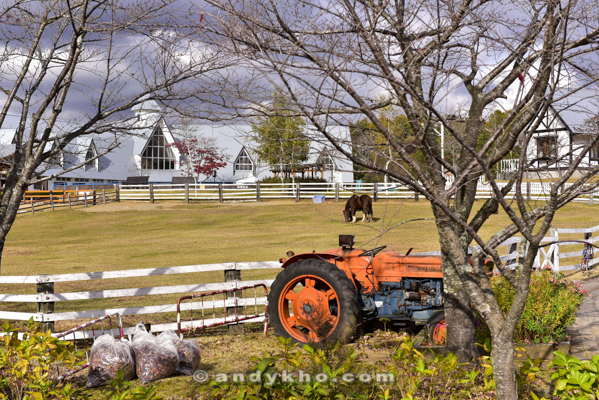
Next, I traveled an hour north to Bokka No Sato Flower Garden and Farm. This place is located about 1000 meters up in the high plateau and is rich with flowers and farm animals. It is a nice place for families as children can play with farm animals as well as ride horses. Different species of flowers bloom throughout the year. In May, tulips are in abundance in the fields while lavenders cover the hills in July. In autumn, the fields are filled with “Cosmos”, the autumn sakura. We enjoyed a BBQ lunch. They are well known for their hida beef BBQ as well as mix BBQ, homemade gujyo pudding, as well as pumpkin ice-cream. These are available year-round.


Lunch

Homemade gujyo pudding.

Pumpkin and vanilla ice cream.
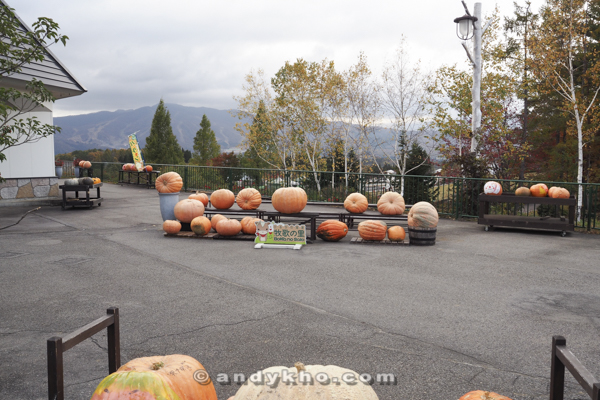
It’s nearing Halloween so it’s pumpkin harvest
I didn’t get to explore this farm much as we were short on time. After lunch, they took me on a quick tour on the cruise train so I only managed to shoot through the window of the train. My next destination takes another hour’s drive north to one of the world heritage site called Shirakawa Village in the Gifu prefecture. As the sun sets about 5pm during autumn, I need to get there before I loose the light.




Click the map above for Google map location
I arrived in Shirakawa village late in the afternoon. The village is surrounded by mountains to the west so that left me only about an hour of clean light before it is covered in shadows. My first stop was the village’s observatory at Shiroyama Tenshukaku Tenbodai. From here, I could get the bird’s eye view of the whole village. Shirakawa is a small traditional village nestled in the mountain in Ono district in Gifu prefecture with a population of about 1734 and a total area of 365.55km square. Declared a world heritage site by the UNESCO in the 1990s, some of the houses here are as old as 250 years.

Bird’s eye view of 114 gassho style houses.

After getting my shots, I requested the driver to take us down to the village where I can get closer shots of the gassho style houses. “Gassho means hands in prayer,” said my guide who actually lives in this village.

The steep roof of the house resembles two hands folded together like in prayer. This unique steep roof design has an angle of 60 degree to allow thick layer of snow to easily slide off during winter. During winter, the snow can be as thick as 4 meters.
Most of the gassho houses are multilayered. The farmers place the silkworm in the attic so the heat from the lower floor where they live rise up, keeping the attic temperature suitable for silk warm cultivation. This means they could continue to cultivate silkworm even in winter. Among all the houses, the Wada house is the largest remaining gassho house in Shirakawa and was built during the late Edo period of 1800AD. The Wada family was the wealthiest family and the village leader of Ogimachi. Today, it is open to the public as a heritage museum.

Large wooden columns supporting the roof of the house.

Inside the Wada house.

Fire fighting exercise

The back of Wada house

The roof of the gassho house is made of straw. When it’s time to change the straw on the roof, the whole village will come together and help out with the straw replacement work. It’s knows as the “Yui” communal system and has been a tradition for generations in this village.


Click the map above for Google map location
After sunset we drove another 2 hours or so to our hotel in Toyama Prefecture called Hotel Mori No Kaze Tateyama. Mori No Kaze Tateyama is a very nice onsen hotel located by the foot hill of the mountain next to a stream.
And finally I’ve checked into my room.

All these to myself.

A suite with dining room separated from the sleeping area.

All dressed up for dinner.

This is what I’m having tonight.

A table for 4.
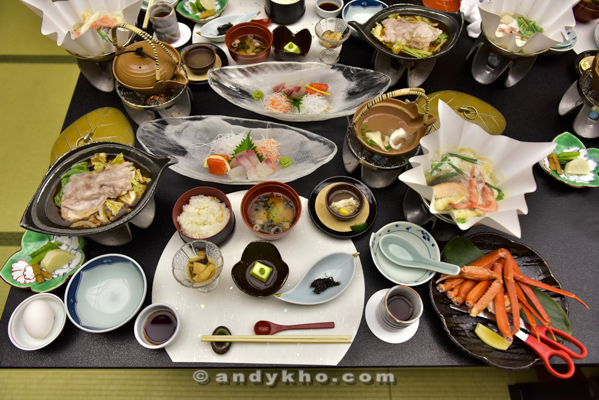
This is my set.


Seafood soup on paper bowl. It’s amazing the paper doesn’t burn up over the fire.
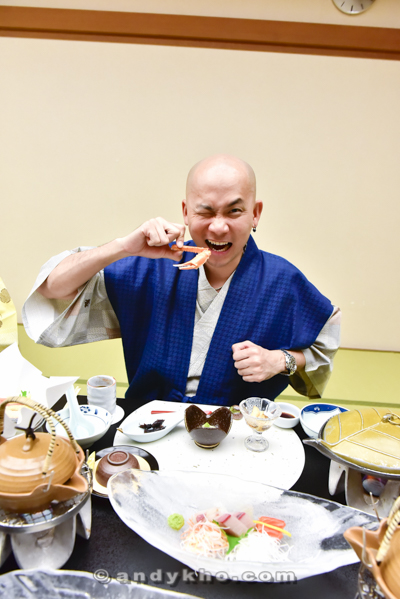


It was a really delicious and filling dinner. I’m going to need all the rest I could get tonight as tomorrow morning I will be exploring the Tateyama Kurobe Alphine Route. As shown in the photo above.